
Published: September 2026
Managing vehicles is about more than knowing where they are. For businesses with company cars,
delivery vehicles, service fleets, or commercial vehicles, having the right technology can
improve safety, accountability, efficiency, and overall fleet management.
Two of the most useful technologies available today are vehicle tracking systems and dashcams.
While they may seem similar because both can help businesses monitor vehicles, they serve very
different purposes.
So, which one should your business choose?
The answer depends on what you want to monitor and the problems you need to solve.
A vehicle tracking system uses GPS technology to monitor a vehicle's location and
movement. Depending on the system, businesses can view real-time locations, review
travel history, monitor routes, and receive alerts based on specific activities.
For fleet operators, this provides visibility into how vehicles are being used
throughout the day.
Vehicle tracking can help answer important questions such as:
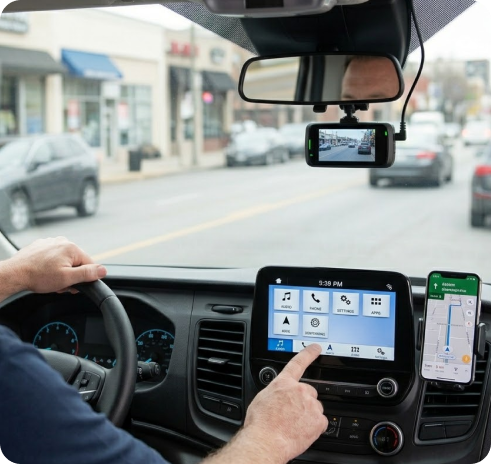
A dashcam is a camera installed inside a vehicle to record what happens on the road. Depending
on the device, it may record the road ahead, the vehicle's interior, or both.
Dashcams are particularly useful for documenting driving incidents. In the event of an accident,
sudden braking, dangerous driving, or a dispute on the road, recorded footage can provide
valuable visual evidence.
Some modern dashcams also include features such as GPS, parking monitoring, driver-facing
cameras, and driver-assistance alerts.
While vehicle tracking focuses primarily on where a vehicle is and how it moves, a dashcam
focuses on what is happening around the vehicle.
The simplest way to understand the difference is to think of them as two different types of
visibility.
Vehicle tracking provides location and movement data.
Dashcams provide visual evidence.
A GPS tracking system may show that a vehicle was traveling along a particular road at a certain
time. A dashcam can potentially show what happened during that journey.
For example, if a company vehicle is involved in an accident, GPS data may help establish the
vehicle's location and movement. Dashcam footage may provide additional context about the
incident itself.
This makes the two technologies complementary rather than direct replacements for one another.
Vehicle tracking can be especially valuable for businesses managing multiple vehicles or
drivers.
Fleet managers can use tracking information to monitor routes, identify unnecessary travel,
improve scheduling, and understand how vehicles are being used.
It can also help businesses monitor unauthorized vehicle use. If a company vehicle is being
driven outside approved hours or taken somewhere it shouldn't be, tracking alerts can help
management identify the activity.
For businesses focused on fleet visibility, route management, vehicle utilization, and
operational efficiency, vehicle tracking can provide significant value.
Dashcams are particularly useful when road safety and incident documentation are priorities.
A recorded video can help provide a clearer picture of what happened during an accident or
traffic incident. It can also help businesses review unsafe driving behavior and encourage
drivers to follow safer practices.
For businesses concerned about accident evidence, driver behavior, road safety, and liability,
dashcams can be an important tool.
They can also provide peace of mind for drivers because recorded footage may help clarify
situations where responsibility is disputed.
Choosing between vehicle tracking and dashcams doesn't necessarily mean you have to choose only
one.
For many businesses, using both technologies can create a more complete fleet management
solution.
Imagine a delivery vehicle is involved in an accident. Vehicle tracking can provide information
about the vehicle's location, route, speed, and travel history, depending on the system's
capabilities. A dashcam can provide video of the road and surrounding events.
Together, these technologies can give fleet managers a much clearer understanding of what
happened.
The same principle applies to driver monitoring. Tracking can show where and how a vehicle is
being operated, while dashcam footage can provide additional context about driving behavior.
Before investing in fleet technology, businesses should consider the size of their
fleet, the type of vehicles they operate, how frequently vehicles are used, and the
risks associated with their operations.
A small business with one or two vehicles may have different requirements from a company
managing dozens or hundreds of units.
It's also important to consider how the technology will fit into existing fleet
management processes. The goal should not simply be to collect more data. The technology
should help the business make better decisions and manage vehicles more effectively.
Modern vehicle technology gives businesses greater visibility into their fleets than ever
before. Vehicle tracking and dashcams each provide valuable information, but they solve
different problems.
Vehicle tracking helps businesses understand where vehicles are and how they move. Dashcams help
businesses understand what happens on the road.
For businesses looking to improve fleet visibility, safety, accountability, and operational
efficiency, understanding these differences is the first step toward choosing the right
solution.
With the right technology in place, businesses can move from simply managing vehicles to
managing their fleet with better information, greater confidence, and improved control.
When it comes to choosing a reliable GPS tracking provider in the Philippines, one name stands out - Whereabouts Vehicles. Found out why they are the #1 choice for businesses and vehicle owners.
Learn MoreLooking for a reliable GPS tracker in the Philippines? Discover top features to look for, why GPS tracking is a must-have for vehicle safety, and how Whereaboutsvehicles delivers a smarter solution.
Learn MoreDiscover how GPS tracking technology can streamline your fleet operations, improve driver performance, and reduce overall costs with the help of Whereaboutsvehicles.
Learn More


